Breathing / QUICK SHORT
What Actually Makes the Hic Sound?
Explore the diaphragm contraction and sudden vocal-fold closure behind a hiccup.
Read the companion guide & try the questions ↓GO BEYOND THE VIDEO
Learning companion
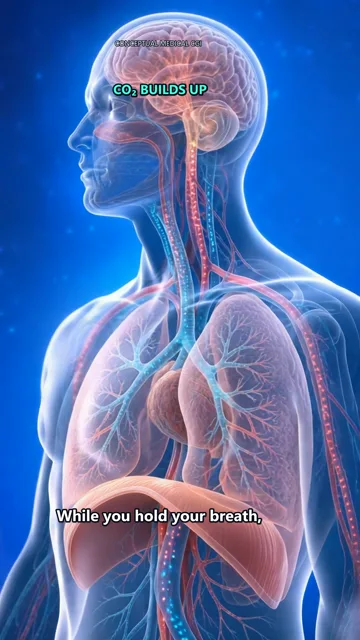
A hiccup connects two structures that are far apart: the diaphragm below the lungs and the vocal folds in the neck. Follow the movement first, then explain the sound.
Original study notes by Anatomy in Minutes · Updated October 14, 2026
One event, two movements
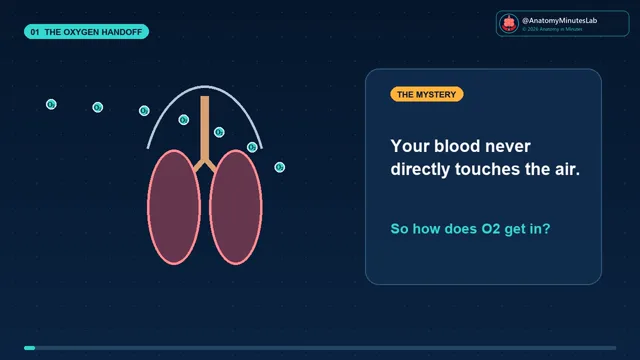
The diaphragm is a sheet of skeletal muscle separating the chest and abdomen. During an ordinary inhalation it contracts, helping expand the chest so pressure in the lungs falls and air moves inward. A hiccup begins with an abrupt, involuntary contraction that interrupts the usual breathing rhythm.
The opening between the vocal folds is the glottis. Its rapid closure interrupts the incoming airflow and produces the characteristic sound. The diaphragm creates the sudden inspiratory movement; the sound does not come from the stomach or from two lungs knocking together.
Use a sequence, not a stopwatch
Draw two boxes: sudden diaphragm contraction, then vocal-fold closure. Add an arrow for air entering and a stop mark at the glottis. A short animation can make this order clear, but an exact millisecond label should not be treated as a measurement of every person's hiccup. A reflex involves sensory input, processing and coordinated muscle activity; it is not a conscious decision.
Most brief episodes resolve on their own. This explanation is about anatomy, not a recommendation to try breath-holding, startling someone, or swallowing unusual substances as a remedy.
Key concepts
- Diaphragm
- The main muscle that changes chest volume during quiet inhalation.
- Glottis
- The opening between the vocal folds, through which air normally passes.
- Involuntary response
- An action that occurs without deliberately choosing each muscle movement.
Check your understanding
Take 3–5 minutes independently. Write an explanation in your own words or sketch a labelled model on paper before opening each answer. These are original practice prompts; nothing is submitted or graded.
Which structure explains the sudden inhalation, and which explains the hic sound?
Show reasoning
The diaphragm contracts to initiate inhalation; rapid vocal-fold closure interrupts the airflow and produces the sound.
A learner labels the hiccup as a stomach muscle squeezing. How would you revise the diagram?
Show reasoning
Place the contracting diaphragm below the lungs and the closing glottis in the larynx. Connect them with an airway arrow rather than placing the sound in the stomach.
Sources and further reading
Use these references to check the science and explore the topic in more detail. The notes above are an original learning companion, not a transcript or copied textbook passage.
Illustrations and AI-assisted scenes simplify scale, timing and anatomy. They are educational representations, not clinical recordings or evidence about an individual. This page provides general education, not diagnosis or treatment.
Suggest a correction or ask a content question