THE ANATOMY IN MINUTES COLLECTION
A little time.
A closer look.
Explore the science behind your body. Pick a full lesson or discover something new in a Short.
A ROUTE THROUGH THE SCIENCE
Choose a learning path
Open a route below, work independently, and keep notes in a journal or on paper. Estimated times include videos and a short written check; take longer when you want to explore further.
Follow oxygen through the body15–20 minutes · Open the steps
Your goal: Connect the heart, lungs, and blood vessels into one explanation of oxygen delivery.
- Follow one red blood cell
Watch the four-minute lesson. Pause once to trace the route through the heart, lungs, and body.
- Zoom in on the alveoli
Watch the four-minute lesson. Read the companion explanation of what crosses the respiratory membrane.
- Check the organ jobs
Complete the six-question organ challenge in 3–5 minutes and read the feedback.
Journal check
Use the final three minutes to draw a circulation loop with arrows. Label where oxygen enters the blood and where it leaves for body tissues. Add two sentences explaining the different jobs of the heart and lungs.
Explore skin and repair20–25 minutes · Open the steps
Your goal: Use observations of skin layers to explain how structure relates to protection and repair.
- Begin with a first look at the skin model
Before the explanations, explore independently for five minutes using the on-page controls in their cut, lift, and peel order. Record three things you notice, two things you find interesting, and one question in your journal. Use your own words; scientific vocabulary can come later.
- Watch how a cut heals
Watch the five-minute lesson, then read its skin-repair notes. Compare one idea with something you noticed in the model.
- Practice with tissue evidence
Complete the tissue challenge. Use its structure-and-function clues and read the explanations after each response.
Journal check
Finish with a labeled sketch comparing two skin layers and a two-sentence structure-and-function explanation. Revisit your opening question: write what you can now explain and what you still want to investigate.
Connect atoms to cell work20–25 minutes · Open the steps
Your goal: Distinguish element identity from charge, then connect molecules with ATP and cellular work.
- Start with atoms, elements, and ions
Watch the four-minute lesson. Write one sentence about what proton number tells you and another about what changes when electrons are gained or lost.
- Follow matter and energy through metabolism
Watch the eight-minute lesson. Pause at its questions and attempt an answer before continuing.
- Test the element-identity rule
Watch the short and answer one companion question in your own words before revealing its reasoning.
Journal check
Draw two linked boxes: breaking molecules down and building molecules up. Place ATP where it helps connect energy release with energy use. Give one example for each box and explain why changing an atom’s charge does not necessarily change its element.
YOUR NEXT DISCOVERY
The video library
Showing 28 videos
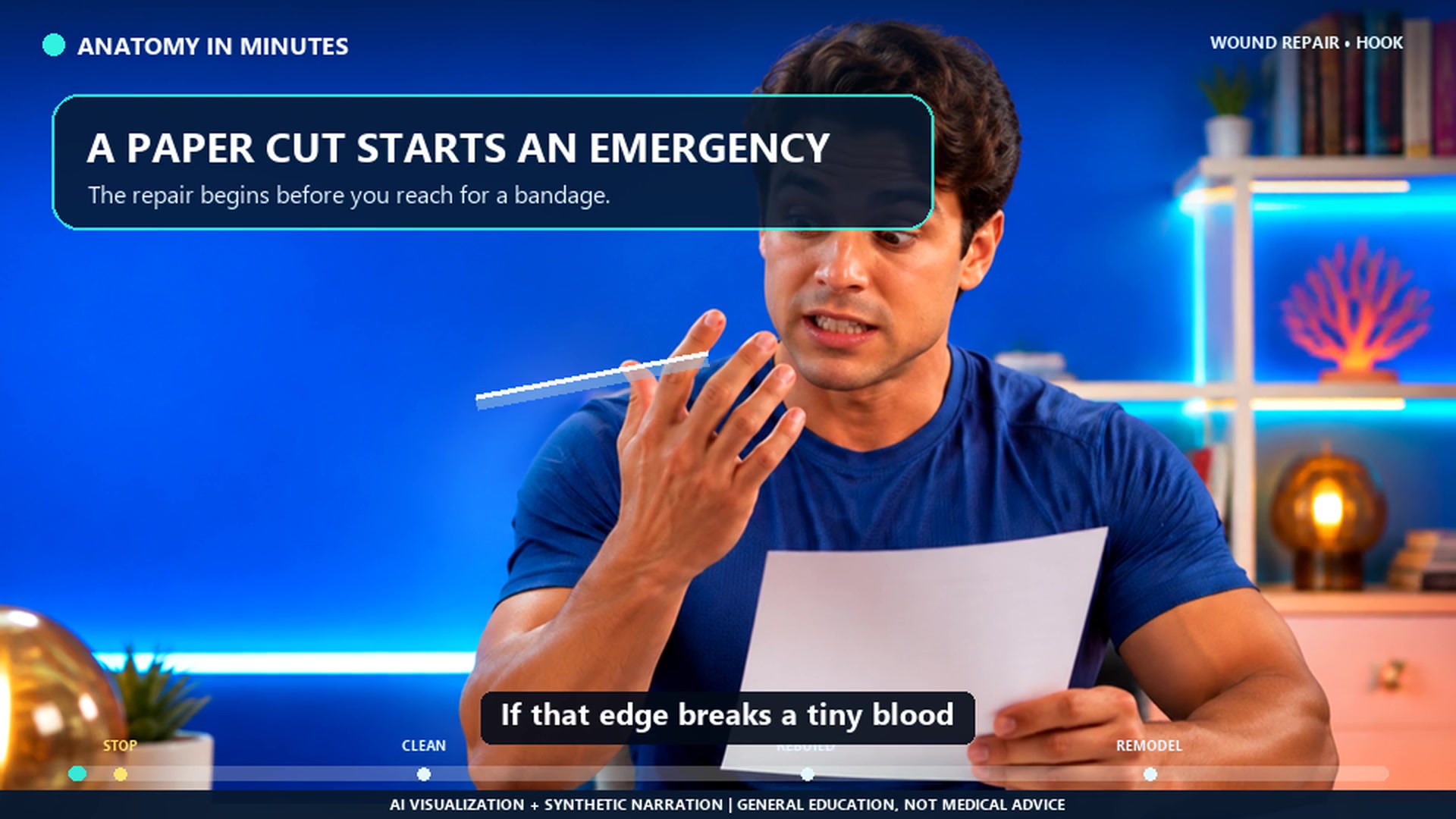 5:11FULL LESSON
Skin & repair
How your body heals a cut
Take a closer look at skin, tissues, and the body’s repair process.Watch now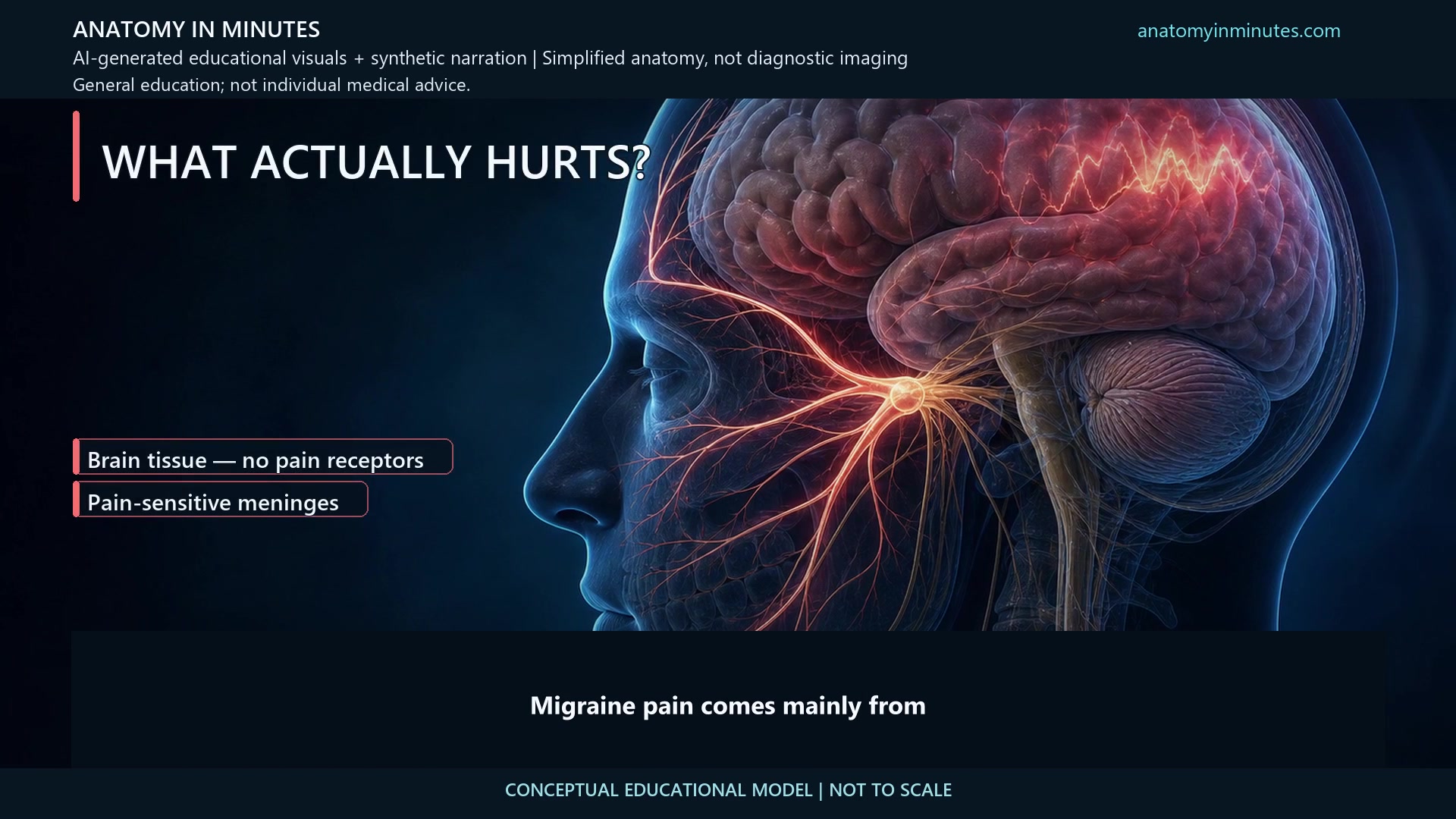 5:38FULL LESSON
Brain & nerves
Understanding migraine
Explore the science of migraine in this narrated anatomy lesson.Watch now 3:49FULL LESSON
Circulation
How the Circulatory System Works | Follow One Red Blood Cell
Follow a red blood cell through the heart, lungs, and body to see how the two circulation loops connect.Watch now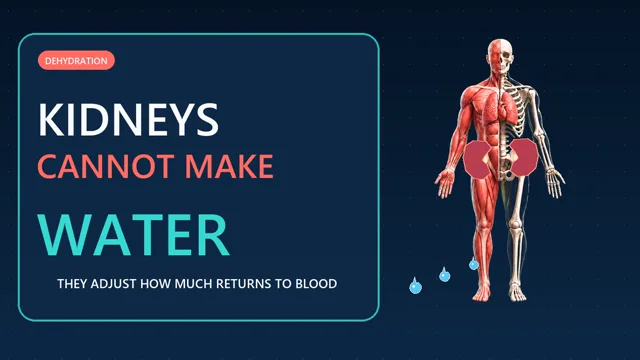 4:49FULL LESSON
Kidneys & homeostasis
How Your Kidneys Save Water When You're Dehydrated
Follow the kidney's water-conservation response and see why urine becomes more concentrated.Watch now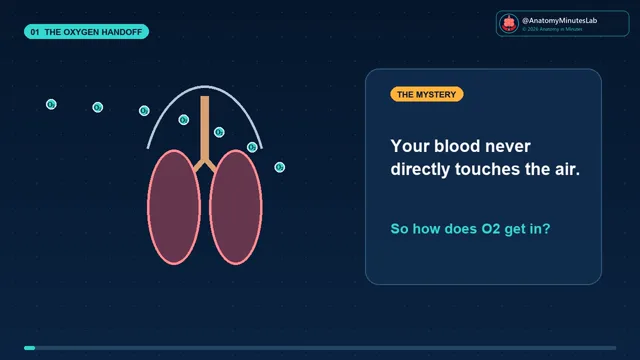 3:45FULL LESSON
Breathing
How Oxygen Gets Into Your Blood | Alveoli Gas Exchange
Follow oxygen from the alveoli into pulmonary capillary blood and hemoglobin, with carbon dioxide moving in the other direction.Watch now 4:11FULL LESSON
Body chemistry
How Atoms Build Your Body | Matter, Elements & Ions
Connect atoms and elements to the body, then distinguish changes in protons, neutrons, and electrons.Watch now 8:20FULL LESSON
Metabolism
Metabolism, Catabolism, Anabolism, and ATP
Connect the breakdown and building of molecules with ATP use, nutrient handling, and whole-body metabolism.Watch now 0:46SHORT
Circulation
How Blood Circulates in 47 Seconds
Trace the heart–lung–body circuit in a brief red-blood-cell journey.Watch now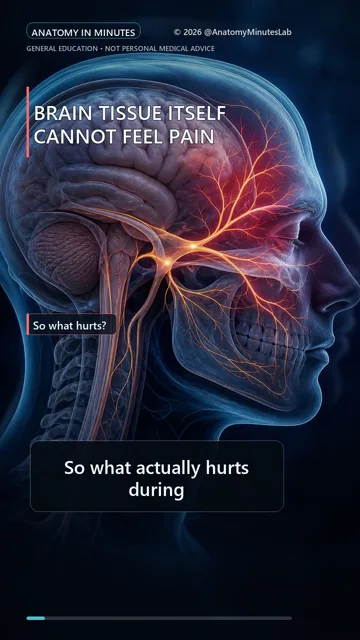 0:59SHORT
Brain & nerves
Brain Tissue Can't Feel Pain—So What Hurts in Migraine?
A brief introduction to migraine signaling, pain-sensitive structures, and the video's safety cautions.Watch now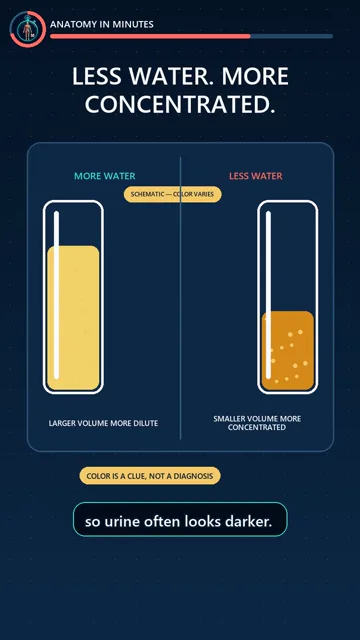 0:44SHORT
Kidneys & homeostasis
Why Your Urine Gets Darker When You're Dehydrated
See how conserving water changes urine concentration, and why color is a clue rather than a diagnosis.Watch now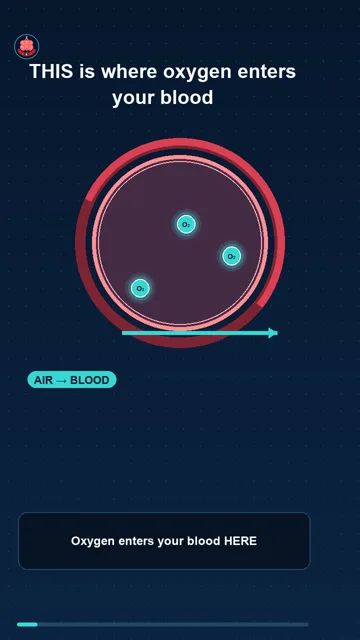 0:57SHORT
Breathing
Where Oxygen Enters Your Blood
A compact view of the alveoli, respiratory membrane, and oxygen's route to hemoglobin.Watch now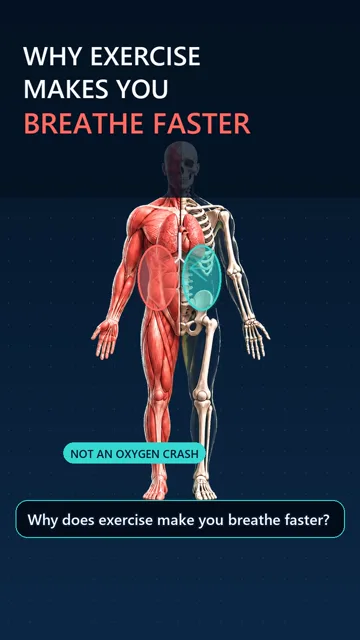 0:41SHORT
Breathing
Why Exercise Makes You Breathe Faster
See how movement signals, working muscles, and gas exchange contribute to faster, deeper breathing.Watch now 0:33SHORT
Sleep & alertness
The 6-Hour Sleep Trap
Why feeling accustomed to short sleep does not necessarily mean attention has adapted.Watch now 0:51SHORT
Brain & nerves
Your Brain Is Trying to Make You Procrastinate
Explore why uncomfortable tasks can make immediate rewards attractive, and how one small action can help you begin.Watch now 0:37SHORT
Movement & Exercise
What 10 Minutes of Walking Does Inside Your Body
Follow the changes in working muscles, breathing, circulation, and coordination during a short walk.Watch now 0:30SHORT
Body chemistry
What Your Body Is Really Made Of
Zoom from the body to tissues, cells, molecules, and the elements that make them.Watch now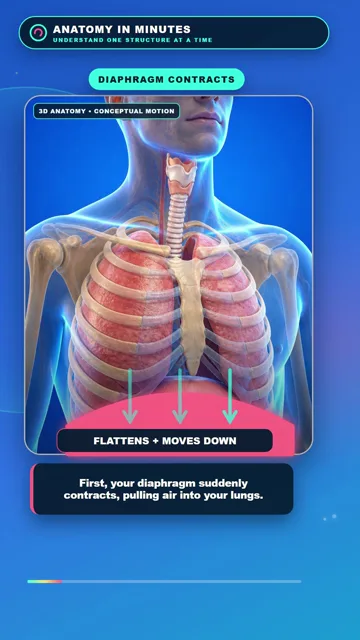 0:24SHORT
Breathing
What Actually Makes the Hic Sound?
Explore the diaphragm contraction and sudden vocal-fold closure behind a hiccup.Watch now 0:53SHORT
Brain & nerves
Why Can Normal Light Hurt During a Migraine? | Anatomy Case 02
A short anatomy drama connects an ordinary lamp with migraine-related light sensitivity.Watch now 0:33SHORT
Homeostasis
Why Do You Feel Cold During a Fever? | Anatomy Case 03
A short anatomy drama explains why an elevated temperature set point can trigger chills and shivering.Watch now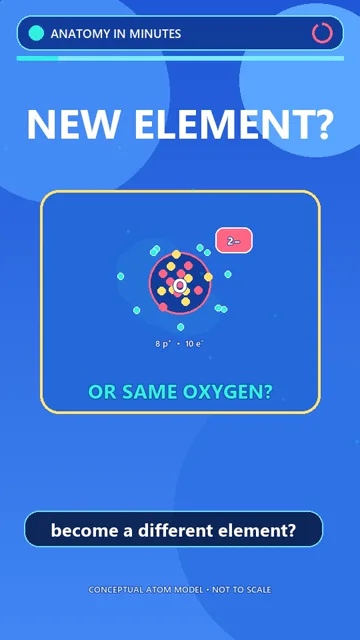 0:30SHORT
Body chemistry
Two Extra Electrons Don't Make a New Element
Use an oxygen atom to distinguish element identity from electric charge.Watch now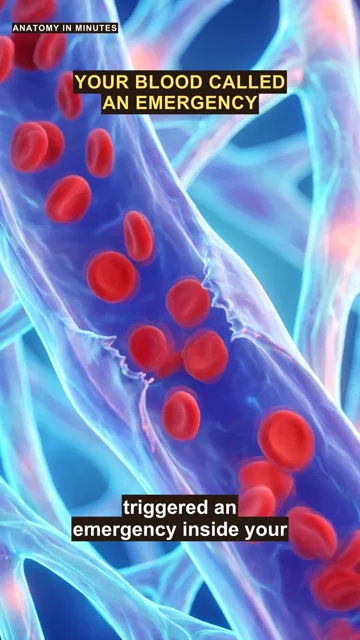 0:27SHORT
Skin & repair
Your Blood Built a Bandage Before You Did
See how vessel constriction, platelets, and fibrin help a small cut stop bleeding.Watch now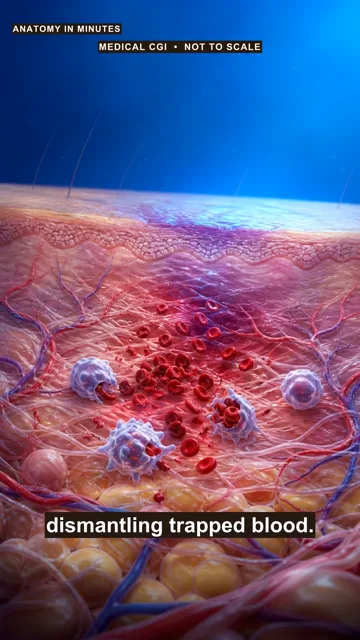 0:28SHORT
Skin & repair
Why Bruises Change Color
Follow the breakdown and clearance of blood pigments beneath intact skin.Watch now 0:32SHORT
Skin & repair
Why Does a Healing Cut Itch?
Explore several contributors to itching during healing, with the video's safety cautions preserved.Watch now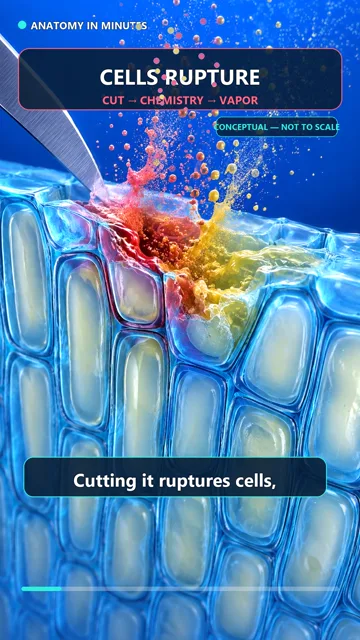 0:28SHORT
Brain & nerves
Why Onions Make Your Eyes Cry
Follow an onion's airborne irritant from the eye surface through the reflex that stimulates tears.Watch now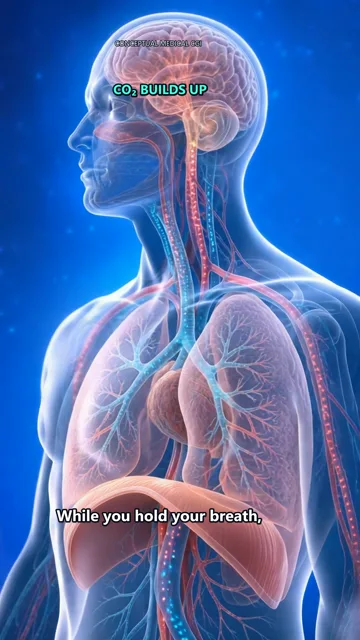 0:27SHORT
Breathing
Why Holding Your Breath Gets So Hard
See how rising carbon dioxide and breathing-control signals contribute to the urge to breathe.Watch now 0:24SHORT
Brain & nerves
Why Nervous Hands Shake
A brief story connects nervous anticipation, muscle activation, and shaky hands.Watch now 0:29SHORT
Skin & repair
Your Skin Sheds—Why Doesn't Your Tattoo?
Compare the shedding epidermis with deeper pigment-bearing tissue to explain tattoo persistence.Watch now 0:36SHORT
Breathing
What Happens When Food Goes Down the Wrong Pipe?
Follow airway protection and the cough response when food takes the wrong route.Watch nowREAD & REASON
Caffeine, alertness, and energy
Why feeling more awake is not the same as getting more fuel. Explore the mechanism, individual variation, and label-reading questions in this sourced text lesson.
Read the energy-drink lesson →